Wednesday, 11 April 2012

Voyager Estate - Harvest Update pt.5

Posted by Julian Campbell, Buyer
Tuesday 10th April 2012

After our earliest ever start to harvest on the 2nd of February, our final harvest of Cabernet Sauvignon was completed on the 4th of April - a nearly 10 week long vintage period.

The ripening period for the reds was exceptional. The late summer heat gave way to classic autumn conditions, with warm dry days and cool nights, which ensured optimum tannin ripeness and flavour development of the grapes.

The yields were slightly higher than our targets, which in a warmer season was no problem, and may have helped avoid accumulation of sugars too quickly. This has resulted in grapes with moderate sugar levels at harvest, producing wines with great elegance and balance. The Cabernet Sauvignon looks outstanding at this early stage and, displays perfectly ripe tannins and fruit with great concentration of flavour and color. The grape skins are thick and leathery, which will stand them in good stead for three to four weeks of extended contact post fermentation.

We are really excited by all of the wines from 2012, however, the reds look to have great promise and the quality is extremely strong across all our vineyard blocks.

The blending components for our Cabernet Sauvignon Merlot are also very strong, with both the Merlot and Petit Verdot again showing layers of fine ripe tannins and great concentration.

Many of the Shiraz blocks have been pressed off and are being transferred to barrel for their maturation phase, and again the quality looks very good. The wines are showing a wonderful purity of fruit with added layers of earthy complexity, which I am sure is a sign of vineyard maturity and careful viticulture practices.

Margaret River has continued to deliver very high quality harvests for the past six seasons, which is exceptional even by our lucky standards. Where 2012 sits - time will tell - however to have such a plentiful harvest with such outstanding quality across the board at this early stage, makes me think it could be near the top!.

Cheers,

Steve James.

Saturday, 7 April 2012

Bordeaux 2011 - Day 4

Posted by Tom Jenkins, Bordeaux Buyer
-->
Our final day in Bordeaux and a chance to fill in one or two gaps and re-taste and re-affirm. First stop Calon Segur. This is the first vintage we have tasted without the formidable gaze of Madame Gasqueton, but the new regime seems to have found their feet. Despite the well publicised hails that affected St Estephe, Capbern Gasqueton and Calon Segur have produced very handsome, classical, delicately perfumed wines, which charmed us all.
 
Crossing the Pauillac quayside for the umpteenth and last time, we headed for the Pichons. Baron displayed even more depth and sweet fruit than the sample at the UGC tasting. This is a very attractive, seductive Pauillac with just a hint of Pomerol exuberance. It's also worth mentioning Suduiraut, another AXA property, which has excelled in 2011. Pichon Lalande is the polar opposite to Baron - this is pure classicism, fine Pauillac fruit and handsome structure - we left impressed!
 
Our upbeat mood was short lived as we headed to the Margaux UGC. A delightful Rauzan Segla towered above the others; I'm not sure it's proper wine terminology, but there were many ‘dogs’ from this commune. What a shame, they should have consulted Luc Thienpont and Jacques Boissenot... Back up the D2 to Latour - and what a Latour. Deep and elemental, brooding, complex, intense, magical and vivid - an extraordinary wine. Sadly yields are similar to 2010, so there will be around 9000 cases produced, and only a fraction of those will be released.
 
Next, a visit to our charming friends at Ulysse Cazabonne. This was a great opportunity to re-taste many samples and enjoy a glass or two of Rauzan Segla and Montrose with luncheon. Petit Chateau that stood out included: Haut Marbuzet - charming and seductive, La Chenade - impressive Lalande de Pomerol and our old friend Chateau Teyssier. Re-sampling the cru classes re-confirmed our positive notes on Rauzan Segla, Leoville Barton, Canon, Domaine de Chevalier and Haut Bailly, whilst we were wowed by a much more impressive sample of Figeac.
 
The rest of the afternoon was spent tasting at the Haut Medoc, Moulis and Listrac and the Sauternes and Barsac UGCs. Already being billed as a vintage to rival 2001 and 2007, the sweet wines are impressive, but on this evidence not all successes. Rieussec is massive and will reward lengthy cellaring, Nairac was the surprise package and Doisy Vedrines stole the show - bravo Olivier Castéja, the 2011 is spellbindingly vivid and is a must buy come the campaign. To say that Haut Medoc was patchy is something of an understatement. One or two wines like Chasse Spleen, Cantemerle and La Lagune shone, whilst many were failures. Careful consideration will be required when buying from the less fashionable appellations.
 
So, in summary, the wines exceeded our expectations. Given the unusual growing season, 2011 will go down as a triumph of modern viticultural techniques and a challenge to winemakers. It was also a vintage for the optical sorting tables. Those with the means and technology had a better chance of success, but gentle extractions were also key. This is no 2009 or 2010, but the best wines are really interesting and if, and it is a big IF, they are priced correctly, these will prove worthwhile additions to collectors’ cellars. We keep our fingers crossed for a quick campaign and leadership and prudence from the First Growths.

Friday, 6 April 2012

Bordeaux 2011 - Day 3

Posted by Tom Jenkins, Bordeaux Buyer
Day three and our focus turns to the Medoc. Pauillac cuts rather a drab presence next to a brown Gironde and under threatening skies - not ideal tasting conditions, but we have a job to do, so we head to Montrose for our first appointment. 2011 was something of a challenge for Chateaux in St Estephe; aside from summer and spring swapping seasons, Montrose had to contend with snow, drought, heat waves and hail. On the evidence of the Grand Vin, they have coped manfully. This has wonderful extract and lots of substance - if it fleshes out it will be a great Montrose.

Next the Justerini cavalcade headed to neighbour and second growth rival, Cos d'Estournel. In truth, this wine proved controversial, splitting the group in two. Some felt that during vinification, Cos had pushed too hard, creating a monster lacking freshness and boasting OTT tannins, whilst others thought there was sufficient sweet cabernet fruit for this to work - time will tell.

Bruno Borie and his charming entourage greeted us at Ducru Beaucaillou. Following a 100 points in 2009 and an even better wine in 2010 was always going to be tough, but Ducru 2011 is one of the undeniable stars of the vintage. He described it as 'Nicole Kidman' - we thought it was sensational, deep, concentrated, exotic, aristocratic, yet with a sweetness and decadence and sumptuous texture - bravo.

Highlights of the afternoon included a stunning range at Mouton - as sumptuous, pretty and accessible as we have seen there for some time. Herve Beland's farewell vintage is a great success.

Pontet Canet impressed us all for its purity, clarity and vibrancy - it is a truly beautiful wine and Alfred, Melanie and the team have every reason to be proud.

Jean-Charles Cazes at Lynch admitted it was "a more challenging year", the threat of sunburn loomed large at the end of June and weather conditions at the end of August and beginning of September were highly conducive to the onset of grey rot, which was checked by thinning and de-leafing carried out earlier in the summer. The hard work paid off, with a number of our team putting it amongst the very finest wines of the vintage.

The Pauillac, St Estephe, St Julien UGC was inconsistent with too many Chateau over extracting and over working their wines. Those that were good though, were very good indeed. Highlights included, Leoville Poyferre, Grand Puy Lacoste, both Pichons, Gruaud Larose, Gloria, Leoville Barton and Ormes de Pez.
Lafite next, and what a range. Tasting Carruades free from preconceptions surrounding its market value can be tough. Be that as it may, the wine is superb. Sweet pure fruit and fine stony tannins - chapeau. Duhart too has its emotional baggage but it was also a great success. A more brooding wine, deliciously classical, mid weight but very intense all the way through, it ably carried the flame lit by Carruades to deliver us to the grand vin. Stylistically this is all Lafite. While closed and initially reticent the team fell in love with its precision, were wowed by its sheer length and seduced by the vivid, floral finish. This is certainly one of the left bank wines of the vintage.

We popped in on Leoville Poyferre to see if it was as good as at the UGC tasting, if anything it proved even better. Next door neighbour Leoville Las Cases have produced a fine range, the best Nenin they have made, whilst Petit Lion, Clos du Marquis and Las Cases itself were an impressive and surprisingly open trio.

Day 4 Medoc follows tomorrow.

Wednesday, 4 April 2012

Bordeaux 2011 - Day 2

Posted by Julian Campbell, Buyer
Our day started with what is always a challenging early morning tasting Chez Monsieur Perse at Chateau Pavie. There is a continued insistence in aggressive extraction here that sadly seems to scrub out any semblance of place and whilst the wines are decently made, in their style, we left hoping the 10 minute drive to Cheval Blanc would be enough for our palates to recover from the tannic sucker punch they had just received.

And recover they did. Helped by one of the most elegant, refined and downright delicious Cheval Blancs we've tried in recent years. What it lacked in 10 intenssity and concentration it made up for in straight up class. Tour de Pin also impressed and will offer a value alternative to Cheval.

The view from inside Cheval Blanc's new winery
UGC Pomerol was frankly something of a disappointment. The team variously liked both Gazin and Clinet, but found too many of the others over extracted, chewy and hard work.

UGC St Emilion on the other hand, often itself very hard work, had plenty to commend. Lesser known names like Balestard la Tonelle & Couspaude have produced pleasant and most importantly drinkable wines that should show nicely 6-8 years down the line. The likes of Canon La Gaffelliere, Clos Fourtet, Grande Mayne all impressed for their combination of sweet fruit, well managed tannins and freshness - while some of these are still unashamedly modern, the vintage seems to have forced a more restrained style on these wines and we think it suits them. Once again Nicholas Thienpont has produced a sumptuous range of wines, with Pavie Macquin stealing the show for us. Sweet, bright, refined and utterly seductive.

Our next stop took us across the river to the gravel suburbs of Pessac. The ever changing portfolio from Clarence Dillon now incorporates a new St Emilion. The two grand vins were undeniably smart and less gargantuan than in recent years, parading the best traits of this vintage; taut dense fruit, tannic finesse and perfumed aromatics. The whites were sensational, combining power, minerality, complex hightoned aromatics and freshness. If only there were more affordable.

Pessac UGC followed. The reds as usual were a mixed bag, the highlight for us was Domaine de Chevalier; pure, honest and beautifully balanced. The real story here is the whites. Those that shone, and shone they did, were Domaine de Chevalier Blanc, La Louviere Blanc, Malartic Blanc and Smith Haut Lafitte Blanc. Intense, vibrant, mineral, saline and fresh. Everything you could want in a white Bordeaux vintage.

Narrowly avoiding the worst of the Bordeaux rush hour we made a beeline for Chateau Margaux. Paul Pontallier was thrilled with the "greatest" Pavillon Blanc of all time and when asked for his thoughts on the red stated simply that "the only disappointment was quantity". Margaux, so we were told was the driest appellation in Bordeaux, and furthermore they had the earliest harvest since 1893. "Maturity, density and freshness" were the trois mots proffered, Paul going to describe the 2011 as "a denser 2008, and even perhaps a denser 1996". Soundbites to one side, Margaux 2011 is undeniably classy, refined, beautifully textured and floral. Classic Margaux.

Neighbours Palmer also had a tiny crop - but the results are sensational. This is a truly exceptional Palmer, sexy, vivid, pure haunting and knocking at the door of their first growth neighbour for quality. There are only 5000 cases to be had this year. Those lucky enough to get hold of one will not be disappointed.

Our final stop of the day was at Clos de Quatre Vents with Maxime Thienpont. From little Z, up to CD4V the 2011s on show here are utterly seductive with tannins as fine and silky as we've encountered on this trip. This must surely be one of Bordeaux's finest little known wines, and year after year we wonder just what an upset would be caused were a bottle to be shown blind at the Margaux UGC. We finished with another look at the exceptional 2010s. Darker in profile and bigger in stature than the 2011s they retain the silkiness of structures and aromatic complexity fans of this estate are used to. As a value buy they are unlikely to be bettered.

Tuesday, 3 April 2012

Bordeaux 2011 - Day 1

Posted by Tom Jenkins, Bordeaux Buyer

With the wine trade’s equivalent to the Ashes safely secured by the Poms, we started the real work on the Right Bank. First appointment - the all new Le Pin. Jacques Thienpont gave us the full guided tour of his new winery; and very impressive it is too. We were marched up the tower to the extraordinary foot press come infinity pool on the top, which also enjoys the most wonderful panoramic views over Pomerol. This traditional Douro technique avoids splitting pips and extracting harsh tannins, not something that Le Pin ever suffered from! The 2011 is the first vintage to be produced at the new facility, and superb it is too. Fragrant, intense, with oodles of perfumed fruit – as profound and as seductive as ever.

Next stop, Jacques’ cousin Alexandre’s Chateau, VCC. Vieux Chateau Certan is always a joy to taste and 2011 does not disappoint. At about a tenth of the price of Le Pin, one might expect it to be overwhelmed, but VCC is a true heavyweight in 2011. Alexandre explained that `11 was a ‘return to classic VCC’ after two vintages dominated by Merlot. 29% of the blend is from Alexandre’s old vine Cabernet Franc plots. If anything, this has more concentration than Le Pin. We loved the noble, regal flavours – a very sophisticated, grown up VCC.

You’d think that things might start to head down hill after such a strong start, but quick stops at Lafleur and Petrus kept the bar high. Lafleur as one would expect is brooding and masculine, but has a sweet, playful, fun-side too in ‘11. Criss-crossing the plateau, we met with the dynamic Denis Durantou at Eglise Clinet. Denis’ range is spectacular. I personally think that the 2011 is the best cuvee of La Chenade is the best I have tasted. Petite Eglise and Eglise Clinet are nothing short of spectacular.

After a brief battle through the streets of Libourne, we were greeted by Christian and Edouard Moueix at their quayside offices. To be honest, the whole range was a highlight, but Providence, Belair Monange, La Fleur Petrus, Hosanna and Trotanoy stood out. All possess ample concentration, plenty of structure and are built for the long haul – a really impressive range of wines.

After lunch, we ventured deep in to Lalande de Pomerol to Hubert de Bouard’s Fleur de Bouard. Angelus is massive and impressive, but didn’t necessarily charm us. Bellevue on the other hand was rather seductive, packed with sweet, decadent Merlot fruit and wrapped in a sumptuous structure.

To complete the Pomerols we just had Evangile and Conseillante to go. The former was utterly regal and as grand as ever, but will require patience. Initially rather demure, with aeration this opened up into a spectacular Evangile – think the structure and precision of the 2008, but with a little more puppy fat. Charles Chevalier, a devotee of statistics is delighted with an IPT reading of 76 and a pH of 4 – a really impressive wine. Jean-Michel Laporte has crafted another smart wine at La Conseillante, but sadly nothing close to the epic 2009 and 2010. Pretty, precise and bright, this is lacking a bit of oomph at the time of tasting. If it puts on a little mid palate weight it could be up amongst the best wines in the commune.

Just three appointments to go, so we bid farewell to Pomerol and we say ‘hello’ St Emilion. Ausone, Chapelle d’Ausone, Moulin St Georges and Fonbel are hit the mark: intense, perfumed, enticing, and with the Ausone - profound. The fruit is quite exotic and wild, with lots of crème de mûre, but there is also that seductive Ausone minerality. Along the Cote to Francois Mitjavile’s Tertre Roteboeuf for our penultimate tasting. Domaine de Cambes is spectacular and could be one of the ‘best value’ buys from 2011. Tertre Roteboeuf is extraordinary; super-ripe fruit content, silky texture, complex, thrilling – one quite easily gets carried away when tasting in this cellar. Roc de Cambes was tasted after Tertre Roteboeuf and certainly didn’t disappoint. At about a third of the price, this is a match for its grander stable mate.

And so to the last degustation of day one. Paul and Cedric Valade greeted us to their Castillon estate, Grande Maye. This father and son team are creating great wines from Castillon and St Emilion. We firmly believe that the eponymous Chateau Valade would make a mockery of many of the grand names in the region. Delightful, charming, intense, enjoyable and well priced wines.

Wednesday, 28 March 2012

Voyager Estate - Harvest News pt.4

Posted by Julian Campbell, Buyer
Tuesday 27th March 2012

It has been a busy couple of weeks with all of our Shiraz harvested, and we are presently picking Merlot and some Cabernet Sauvignon.

The weather conditions have been absolutely perfect for finishing off the reds - sunny warm days around 26 degrees celsius with cool nights around 11 degrees.

The quality of the reds appears exceptional, with excellent early tannin ripeness and beautiful freshness in the fruit flavours. The Cabernet Sauvignon particularly looks outstanding, with nice small berries and thick skins, which will enable a long period of skin contact post fermentation. This helps to build complexity and structure into the wine.

A recent tasting of the whites from 2012 also revealed a very high quality harvest. The Chardonnay is nearly all through fermentation and is showing lovely balance with the trademark tight citrus fruit elements we look for. The early batches of Sauvignon Blanc and Semillon have been blended and are also displaying crisp citrus and white stonefruit flavours with lovely structure and balance.

If this perfect weather continues we will go close to completing harvest in the next couple of weeks.

The team is really happy with the overall quality and the yields have also been on target or slightly above, which all points to another great vintage in Margaret River - provided the yields were managed carefully.

Cheers,

Steve James.

Friday, 16 March 2012

A Marquis d'Angerville Masterclass

Posted by Giles Burke-Gaffney, Buying Director

On Tuesday this week Guillaume d'Angerville came to London to present to journalists 16 of his wines at the Connaught Hotel. The tasting was kick-started by the thrilling 2010s. They were nothing short of magnificent even at villages level. 2010 is an excellent vintage and the Marquis d'Angerville wines are up there with the year's very best examples. The Domaine is steeped in history and has made great wines over decades but it is clear to me that, since taking over the reins in 2003, Guillaume is taking the Domaine to another level. This is not being done through wholesale changes, it largely respects the work of his father Jacques - hard vineyard work, minimal intervention in the cellar, a maximum of 20% new oak. The biggest change is the full conversion to biodynamic viticulture and this, together with Guillaume and his team's extreme rigour and attention to detail, are lifting quality through the roof.

Together with the 2010s, we were treated to a vertical of Clos des Ducs, one of the Cote de Beaune's great vineyards. 2008, 2007, 2002, 1999, 1998 and 1990.

Great wine or great winemaking rarely produces something flashy or immediate, to me it seems to be more about wines that are complex, develop in the glass and that show traits which can be attributed to terroir and vintage. There was no question that each of these 16 wines had its own and very clear cut personality - for me this is truely the magic of wine and the magic of Burgundy. My brief thoughts on the various vintages below, anyone still cellaring 1999s take note: Whilst this may be a vintage that closed down for far longer than anyone expected there are signs that, judging by Clos des Ducs at least, patience will reward you heavily.

2008 - Fresh, red fruited, so alive and uplifting, drinkable now and certainly less of the tannic structure than expected but with plenty left in the tank to age very well.

2007 - tender, fruity, sweet as a nut and absolutely perfect for drinking now over the next 5 years

2002 - closed, tightly wound and a little wild initially. After several hours this settled in the glass and some very clear crisp but ripe red fruit aromas and flavours surfaced, eventually this proved to be a beauty.

1999 - even more closed than the 2002, initially this was not my favourite wine of the line up but after 4 hours it opened up into the best wine of the flight, for me, by a distance. deep dark ripe so intense and complex. Stunning!

1998 - a little wild but none of the hard edges I was expecting, in fact this was the biggest surprise of the tasting, not the ugly duckling vintage many said it was, lively crisp characterful, intense but moreish

1990 - still a baby, the most powerful and intense wine of the lot, had not even awoken by the time the 1999 had come round.

Wednesday, 7 March 2012

Voyager Estate - Harvest News pt.3

Posted by Julian Campbell, Buyer
Voyager Estate Harvest Update - 7th March 2012

Today sees the completion of the white grapes from our vineyards, with the harvest of a small patch of Viognier. The skins from the Viognier will be incorporated with our first block of Shiraz for co-fermentation. We only use about one percent Viognier in our Shiraz, and find it is important in adding subtle floral nuances and lift to the wine. The Shiraz looks amazing, with excellent tannin ripeness and vibrant berry flavours now emerging in the fruit. With a week of perfect autumn weather forecast, I suspect most of our Shiraz will be harvested over the next ten days. We employ mainly hand harvesting on our Shiraz and, tend to pick small batches at a time. The fruit is gently crushed into open fermenters, leaving a lot of whole berries in the ferment, which offers a soft extraction of flavours and tannin.
The Cabernet Sauvignon is also looking great with excellent early flavour development. The warm days and cool nights are perfect for finishing off this variety which loves a bit of 'hang time' on the vine to achieve full physiological ripeness and concentration of flavour.

Cheers,

Steve James.

The J&B Portfolio Tasting - 18th April 2012

Posted by Julian Campbell, Buyer

Have you ever wondered about the lengths a 260 year old merchant goes in securing you the greatest wines from all over the world? “Discovering Justerini & Brooks” will reveal all. This tasting is a journey of discovery through our portfolio, giving you the chance to taste over 200 of our favourite wines.

We take great pride in our list and are therefore delighted to invite you to this unique and extensive tasting. There will be wines from across the length and breadth of our portfolio, growers and winemakers on hand to talk you through their wines, and masterclasses for those that want to take a more in-depth look at certain wines or regions.

Room by room you will be taken around both the world’s greatest wine-producing regions, and those which are up and coming; we leave no stone unturned. From Champagne and Sparkling, through to heavyweights like The Rhone, Burgundy and of course Bordeaux. In between you will find Hungary, Italy, Spain, United States, South America, Australia, New Zealand, and much more...

All situated in the beautiful setting of London's iconic Somerset House. We hope you can join us for what promises to be a highly enjoyable evening.

Date: Wednesday 18th April 2012, from 5pm till 9pm
Location: The Portico & Navy Board Rooms, Somerset House, London
Tickets only £35 each and available by calling us on +44 207 484 6400 or emailing justorders@justerinis.com

Thursday, 1 March 2012

Liv-ex 100 - Turning the corner?

Posted by Tom Jenkins, Bordeaux Buyer
In economic terms, two quarters of negative growth constitute a recession. In the wine world, two positive months on the Liv-ex 100 constitutes cause for cautious optimism. After January's 1.39% gain, the first positive month end since March 2011, the leading fine wine index has posted another small rise, up 3.36 points at 293.66 (or +1.16%). This makes the index down 17.8% for the last 12 months, but maybe the re-building process is underway - next target is the 300 mark!

Tuesday, 28 February 2012

Video Interview with John Belsham, Foxes Island

Posted by Julian Campbell, Buyer
John Belsham is a man of many talents. First and foremost he is the founder and man behind Foxes Island wines in Marlborough, New Zealand. The first wine he produced was a Chardonnay, back in 1992, and since then he has secured and planted plots of Riesling, Sauvignon Blanc and of course Pinot Noir in the Wairau plains of Marlborough. His wines are some of the best we have tasted from New Zealand, and testament to what can be produced their given a conscientious and gentle approach.


Friday, 24 February 2012

Voyager Estate - Harvest News pt.2

Posted by Julian Campbell, Buyer

Voyager Estate Harvest Update - 23rd Feb 2012

Harvest has been progressing very nicely with consistent warm weather and no rainfall. The heat of January has subsided and the past couple of weeks have seen perfect ripening conditions for Sauvignon Blanc and Semillon.

Our Chardonnay harvest is completed and the wine is fermenting beautifully in barrel.

Currently we are busy harvesting Sauvignon Blanc and Semillon which is right in the fruit flavour window we look for with these two varieties. Tropical fruit flavours of passionfruit and guava with some citrus and white stonefruit  from the Sauvignon Blanc, combine perfectly with the citrus and straw from the Semillon. The Sauvignon Blanc provides aromatics and vibrancy whilst the Semillon is important for palate weight and texture. Around 20% of the Semillon component will go to new French oak for fermentation, whilst the rest of the blend is fermented in stainless steel tank to retain freshness and vibrancy.

The most amazing thing about this vintage is the early tannin ripeness we are seeing in the reds. Similar to the great 2010 vintage, the tannins and seeds are ripe already, which will enable early harvest on the reds and more elegant fruit flavours with lower alcohols. Fingers are crossed for an exceptional red wine vintage!.

Cheers,

Steve James.

Thursday, 23 February 2012

Barolo Brass Monkeys

Posted by Giles Burke-Gaffney, Buying Director

My annual pilgrimage to Piedmont is one of my absolute favourite trips, often occurring in mid March when the snow has been melted away by the increasingly warm sunshine, Spring is very much in the air. I always wondered whether it was the time of the year that made me feel that extra level of enthusiasm for the people, region and their wines. The 2012 voyage was to prove a stern test. My journey out there last week, earlier than usual, was accompanied by tough conditions, as the driver of this mini no doubt discovered. There was heaps of snow and minus 13 degree temperatures.

However the wines, predominantly the 2008 Barolos, passed the test with flying colours. The structure in Barolo is very similar to Burgundy, small artisan wine producers making individual vineyard expressions of, largely, one unique Barolo variety, Nebbiolo. The wines are clearly more tannic than Burgundy in their youth and more alcoholic, but otherwise there is often as beguiling and fragrant an aromatic profile, similarly light to mid deep colours but with enormous intensity of flavour and a marked difference in taste depending on the vineyard the grapes are grown in.

For me, time and again, the height of vinous pleasure comes from wine made out of a single grape variety, grown at its extremes, that expresses a site-specific complexity and character. Pinot Noir in Burgundy, Riesling in Germany and, of course, Nebbiolo in Piedmont.

I was totally seduced by the 2008 Nebbiolo based wines. Admittedly I was fortunate enough to taste at some of the greatest addresses in the region, including Clerico, Voerzio, Altare, Paolo Scavino, Vietti, Sandrone, G Rinaldi and G Conterno. Perhaps further down the pyramid there may well be variability, more so than in 07, but I found that with quality wine growers their efforts were every bit as enjoyable as the 2007s. The 07s are so seductive, smooth and complex. 2008s are clearly different but equally seductive. The very late and cool season, many growers weren't finishing harvest until end of October, was perfect for the late-ripening Nebbiolo and has resulted in one of the most aromatic vintages of the last ten years. The wines are fresh, like 1998, but have more stuffing and tannin, without the austerity of 2006 or 1996.

So many of these great Barolos hugely impressed me and had me reaching for my glass for another sip (which in my view should be the function of any truly great wine.) However the single most surprising bottle was from a lesser known area. The Rocche d'Ampsej Riserva from Matteo Correggia 2008 shows just what greatness the under-appreciated Roero region can achieve. The perfumed, poised, bitter-sweet Nebbiolo mix of red fruit, flowers and richness I found totally beguiling.

I much look forward to our full offer of the new releases in September 2012.

Monday, 20 February 2012

Voyager Estate - Harvest News

Posted by Julian Campbell, Buyer
Steve James, our good friend at the ever popular Voyager Estate has once again been in touch with news of the harvest in Margaret River. Due to some technical difficulties this is a little late to be posted, but there will no doubt be more to follow:

2nd February -  2012

Due to one of the hottest Januarys on record, we commenced our 2012 grape harvest today - a record 5 days earlier than our previous earliest vintage 2007.
Consistently warm to hot weather with mild nights has ripened the Chardonnay fruit quite quickly, which is developing very good flavour at low sugar levels. Due to our early harvest regime the acidity levels are very good, and the first block of fruit picked has lovely lime/lemon flavours which this block consistently displays. This block is planted to Chardonnay Dijon Clone 95, and whilst not overly powerful in fruit intensity, it offers a more textural and structural element to our wine. It is perfectly suited to fermentation in barrel with lots of solids and, allowing the indigenous yeasts to do their thing.
We have a few cooler days forecast, followed by some warmer conditions later next week, so I expect harvest will be in full swing by early to mid next week.
All varieties are through veraison and, the early cane and seed ripeness on the red varieties is the best I have seen!.
I am sure next week will have a lot more action with quite a few Chardonnay blocks very close to ripeness.
It is great to be underway and, embracing another early and potentially compressed harvest period ,which will keep us all quite busy for the next 6 to 8 weeks.

Steve James, Voyager Estate

Tuesday, 24 January 2012

Southwold 2012

Posted by Tom Jenkins, Bordeaux Buyer
The great and the good of the wine trade (and yours truly) recently descended upon the little Suffolk seaside town of Southwold for yet another epic blind tasting.

This year was the turn of the 2008s. Initially tasted in the spring of 2009 in the wake of Lehman Brothers’ collapse and the first credit crunch, some merchants boycotted the tastings altogether. J&B made the annual pilgrimage, and with certain caveats, we liked what we saw. It was evident that the estates with the best terroir and the deepest pockets fared best. Some lesser properties displayed green notes - not unsurprising given the cool growing season.

Angelus released before Easter and the First Growths released soon after at very attractive prices. This gave the campaign some impetus, but it was when Robert Parker raved about the wines that the campaign really took off. In retrospect, Big Bob was a little over zealous; the two subsequent vintages, which can both stake claims to being potential vintages of the century, rather overshadowed the 2008s, so the downgrades came as no surprise.

Over the three days we tasted over 250 wines by commune. I am not permitted to disclose average or other individual’s scores, but I can disclose by own thoughts, so what follows is my personal view from the tasting and is not necessarily the consensus of the group. 2008 is a very mixed bag. There are many highlights, particularly in the northern Medoc and Pomerol. Wines that showed extremely well for me included: Cos d’Estournel, Montrose, Calon Segur, Lafite, Mouton, Lynch Bages, Pontet Canet, Pichon Lalande, Leoville Las Cases, Leoville Poyferre, Langoa and Leoville Barton, Ducru Beaucaillou, Gruaud Larose, Lagrange, Palmer, Margaux, Haut Brion, La Mission Haut Brion, Carmes Haut Brion, Domaine de Chevalier, Malartic Lagraviere, Le Pin, Petrus, Eglise Clinet, VCC, Evangile, Providence, La Fleur Petrus, Hosanna, Cheval Blanc and Tertre Roteboeuf. Particular mention should go to Angelus and Pichon Baron, both were real over-performers.

As to the character of the wines, there were a few changes and themes. I noticed a sweeter character to the fruit in the flights of St Estephes and St Juliens, however, this was not evident in the Pauillac flights. I have no evidence, but estates are permitted to add up to 15% of the final blend from other vintages and there was a decidedly 2009 style to some of these... They will no doubt give much early drinking pleasure. The top wines from the Medoc are more structured than I remember. This could be a result of press wine added to the blend. Tannins are ripe, but they are big and solid and acidities are high. This should bode well for long keeping, but one required a bit of stamina to taste through some of these flights (maybe I’ve just gone soft after the 2009s and 2010s...).

After the palate-pounding two days, we tasted a couple of flights of Sauternes to finish. The first flight of less well known estates didn’t really do much for me. The final flight including the likes of Yquem, Climens and de Fargues was considerably more interesting. It was a tiny crop, I believe yields were as low as 3hl/ha and most of the fruit came from the first two picks as latter tries encountered problems with frost. Yquem, Suduiraut and Guiraud topped my list; all displayed ample sweetness, lovely precision, pure flavours and great balance. It is a somewhat overlooked Sauternes vintage, but don’t dismiss the 2008s, these are charming wines.

Monday, 23 January 2012

Un Mot: Burgundy 2010 (part two)

Posted by Julian Campbell, Buyer
The questioning continues...


Wednesday, 18 January 2012

Un Mot: Burgundy 2010 (part one)

Posted by Julian Campbell, Buyer
In which we ask some of Burgundy's greatest wine makers the impossible question, namely, can you sum up your 2010s with a single word? Part two to follow...


Thursday, 8 December 2011

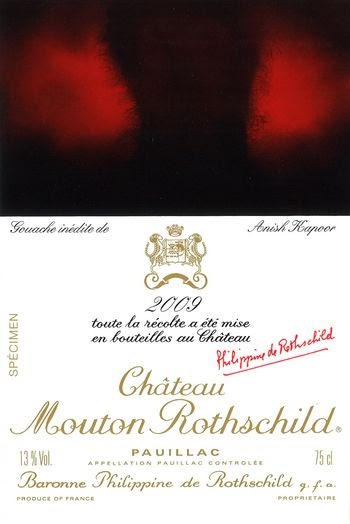
Mouton Rothschild unveils their 2009 label.

Posted by Tom Jenkins, Bordeaux Buyer
British artist Anish Kapoor has been added to the list of modern artists, including: Pablo Picasso, Salvador Dali, Marc Chagall, Andy Warhol, Francis Bacon and Lucian Freud to be commissioned to produce a work for the Mouton Rothschild label. Mr Kapoor was born in Mumbai in 1954, but has resided in the UK since 1972. He won the Turner Prize in 1991, but is probably best known by Londoners for his 2002 commission, Marsyas, which filled the vast Turbine Hall at the Tate Modern.

Anish Kapoor is described as being ‘renowned for his enigmatic sculptural forms that permeate physical and psychological space. Kapoor's inventiveness and versatility have resulted in works ranging from powdered pigment sculptures and site-specific interventions on wall or floor, to gigantic installations both in and outdoors. Throughout, he has explored what he sees as deep-rooted metaphysical polarities: presence and absence, being and non-being, place and non-place and the solid and the intangible’. http://www.tate.org.uk/

The Chateau’s press release described the commission as, ‘at once austere and flamboyant, the gouache he has created for Mouton Rothschild 2009 expresses the fertile thrust of plant life, the result of an intense encounter between matter and light’.

Wednesday, 30 November 2011

Burgundy 2008 - Burgfest (cont): Clos Vougeot and Gevrey Chambertin

Posted by Hew Blair, Buying Director and Chairman
CLOS VOUGEOT

Two full flights of Clos Vougeot were tasted, 17 wines in total. What we saw was a little inconsistent with many falling short of their Grand Cru status. The easy winner on the day was the stellar Anne Gros example - masculine, broad shouldered packed with blueberry and bramble, real Grand Cru depth of fruit, densely textured with outstanding length and complexity . Other good Clos Vougeots were also from members of the Gros family, Micheal and Bernard and negocient Jadot.

GEVREY CHAMBERTIN

To cover the Premieres and Grand Crus of Gevrey ten flights were tasted. In no other village is the interpretation of the same terroirs so diverse. The modernist black coloured, high extract styles were still represented but with fewer extreme examples than in previous years. On the other hand, whole bunch ( with stalks ) fermentation is becoming widespread, throwing in another dimension for the tasting team to take into account.

The lower lying 1er Crus were covered in two flights. They as a group were not as exiting as those from further up the slopes but did include some outstandingly good wines. Amongst them were Corbeaux, Denis Bachelet; fresh, elegant yet with explosive sweet fruit tannins. Cherbaudes, Louis Boillot; refined, beautifully defined dark berry fruits yet powerful long finish. Clos du Fonteny, Bruno Clair; sweet spice and herbs, exquisitely poised with big structure and a great future ahead.

Two flights from the higher 1er crus showed off the qualities of the vintage to a consistently higher degree. The Clos St. Jacques' of Rousseau and Clair have sensual qualities yet density of fruit and supreme complex tannins. The Cazetier, Faiveley; restrained, elegant and all on pleasure and the Arnaud Mortet, Champeaux; bursting with blackberry and sloe. It packs quite a punch.

The next flight included Charmes, Mazoyeres, Chapelle, Griotte, Mazis and Ruchottes. Non of them hit the heights of the previous flight of the ariere Cote (Cazetiers + Clos St Jacques) with the best just falling short. Unsuprisingly the Charmes of Rousseau and Denis Bachelet were outstandingly good, taut, mineral with great purity and length of flavour. Also noteworthy was the Ruchottes of Christophe Roumier; silky textured with exquisite 'petit fruits 'that evolved beautifully on the palate.

The Latricieres flight was impressive, the ripeness of the vintage combining admirably with the mineral edgy style of the appellation. Drouhin Laroze has made a wonderfully seductive example, sweet fruits , mineral complexity - pure pleasure. Another fine wine from Faiveley endorsed the revival of this Domaine, dark berry fruits and fine tannins ensuring elegance.

A flight of 6 Clos de Beze and 8 Chambertin followed. The overall quality was brilliant, many receiving 92+ scores from me. The complexity of ripe fruits , intensity of flavours and exquisit fine firm tannins, when combined, make for superb Grand Crus. If anything the flight of Beze had the edge, showing rich textures and sweeter plush fruits compared with the more structured drier Chambertins. The most striking example being the fabulous Beze of Rousseau which received my top mark overshadowing the more tannic solid Chambertin. Indeed the Beze flight included excellent examples from Perot Minot, Bruno Clair, Faiveley, and Drouhin Laroze.

Thursday, 10 November 2011

Burgundy 2010 - Small is Beautiful

Posted by Giles Burke-Gaffney, Buying Director


Burgundy may still be thick with fog, but there is something crystal clear here - 2010 is an excellent vintage.


I write this with one more tasting to go early tomorrow (friday) morning having spent two weeks here seeing circa 45 Domaines and tasting over 200 wines. Thats alot, but the fatigue is not too bad, in fact I even feel a gentle spring in the step. These have simply been easy, joyous wines to taste, red and white, which is amazing considering their concentration and racy acidities.


It largely all began with frost (for some) and uneven flowering (for all.) The resulting crop was to be one of the smallest on record for many, equalling that of 2003. A good thing, too, in the end, as the small crop ripened brilliantly despite the gloomy summer. Harvest was a good three weeks later than in 2009, fine but cool weather permitted growers the patience to wait for the perfect picking date. That said, towards the end of the harvest, some Chardonnay growers had to hurry as a dry electric storm suddenly accelerating ripening rapidly. The Reds are concentrated, they exhibit great freshness and high acidities, which you barely notice so smothered are they in pure ripe fruit. The tannins are present and fortifying but are so smooth that they do not jar. These are seamless, almost weightless wines of sheer brilliance and balance. The vintage might not have the out and out concentration of 2005, but they should be long-lived nonetheless and despite being the polar opposite of the lovely 2009, it is every bit its equal (and, for some, better!) Cote d'or whites are concentrated, very concentrated. Their acidities are as racy as those of 2007 but with a great deal more richness and depth. In both colours 2010 should go down as an absolute classic.


Such was the consistency accross the region's (top) growers it is very hard to pick out highlights. Those that immediately come to mind are Cecile Tremblay, Marquis d'Angerville, Follin-Arbelet, Chevillon, Sauzet, Bachelet Monnot, Liger Belair, Grivot, Bruno Clair, Rousseau, Roumier, Mugnier and not least Denis Mortet - young Arnaud Mortet has made a magnificent range that firmly puts him in the top tier of Burgundy producers.


For Reds, there seems to be no particular pattern save that I tasted many excellent wines from Clos de Vougeot. There were many excellent whites, too, but Corton Charlemagnes really stood out for their brilliance and consistency.


Keep an eye on the blog over the coming month for the growers views on the vintage in "un mot," a video to be posted here soon.